For those of you not in class today, we did an experiment for 5 minutes where everyone put away electronic devices during that time. I told a story about why I wanted to perform that experiment. Afterward, a survey was administered to get the reactions of students.
I posted a link to the results in Moodle. Not surprisingly, they were varied. I found the comments interesting. I suspect you'll find them interesting as well.
As I have a PowerPoint already prepared for next Monday, I will make a video of that. Whether I do so for future sessions, I'll leave open now. I'm still hopeful that we can generate some back and forth on the issues and I'd much prefer that to giving a straight lecture.
Wednesday, October 28, 2015

Excel Homework Due 11/3 at 11 PM
This homework is on the simplest possible version of the principal-agent model. It is this model that produces pay for performance as a feature. It is important to understand this base model before we delve into various realistic ways of complicating the model. (Mostly we will talk about that but I might do some additional modeling in class after going over the basic model.) There is a video I'd like you to watch first. It should give you the background you need to do the homework.
Video
Excel File
Video
Excel File
Notes for class session on Bargaining
Foreshadow next class session on conflict - Argyris and Schon Model 1 and Model 2.
Thinking Gray - The Contrarian's Guide to Leadership
Timer
A live example of negotiation in the classroom (and thus an illustration of today's topic, bargaining).
This issue isn't mentioned in the course syllabus.
Bargaining Homework Submissions (This link will only work for me.)
Saichel - Yiddish Word
Survey
The Zen of Listening
Peter Doolittle Ted Talk - Working Memory
---------
John Nash The Bargaining Problem
Co-Opetition Brandenburger and Nalebuff
The Diffeq from Hell
Thinking Gray - The Contrarian's Guide to Leadership
Timer
A live example of negotiation in the classroom (and thus an illustration of today's topic, bargaining).
This issue isn't mentioned in the course syllabus.
Bargaining Homework Submissions (This link will only work for me.)
Saichel - Yiddish Word
Survey
The Zen of Listening
Peter Doolittle Ted Talk - Working Memory
---------
John Nash The Bargaining Problem
Co-Opetition Brandenburger and Nalebuff
The Diffeq from Hell
Monday, October 26, 2015
Notes and Links for Class on Sharing the Marbles/Intrinsic Motivation
Volunteering - Peter Drucker
The Essential Drucker, a collection of Peter Drucker essays. It is not a new book, but it is worth the read. He argues that people should have two jobs, one for pay, the other where they volunteer. It is the second job that gives the sense of social responsibilities and fills in all the needs that the market doesn't provide. He also makes clear that people volunteer for two reasons, both of which need to be satisfied - they have to feel their efforts matter and they have to feel they grow from the experience so training to encourage growth is paramount.
Drucker Institute
Justice and Fairness - John Rawls
Rawls offers an alternative to utilitarianism (for us this is maximizing the social surplus). He allows for some inequality, provided it is needed to benefit all. He looks at society from a "Veil of Ignorance" where people don't know what station in life they will hold - rich or poor, talented or infirmed. From there he concludes that the aim of society is to make those worst off have the highest attainable welfare. (You can think of this as a maximin strategy for society as a whole.)
A Theory of Justice
Justice as Fairness
Group Work - Web site from Carnegie Mellon
Intrinsic Motivation Maslow and Self-Actualization
Web site from Shippensburg University
Properties of the Self-Actualizer (Abraham Lincoln may be the quintessential example.)
Truth, rather than dishonesty.
Goodness, rather than evil.
Beauty, not ugliness or vulgarity.
Unity, wholeness, and transcendence of opposites, not arbitrariness or forced choices.
Aliveness, not deadness or the mechanization of life.
Uniqueness, not bland uniformity.
Perfection and necessity, not sloppiness, inconsistency, or accident.
Completion, rather than incompleteness.
Justice and order, not injustice and lawlessness.
Simplicity, not unnecessary complexity.
Richness, not environmental impoverishment.
Effortlessness, not strain.
Playfulness, not grim, humorless, drudgery.
Self-sufficiency, not dependency.
Meaningfulness, rather than senselessness.
The Essential Drucker, a collection of Peter Drucker essays. It is not a new book, but it is worth the read. He argues that people should have two jobs, one for pay, the other where they volunteer. It is the second job that gives the sense of social responsibilities and fills in all the needs that the market doesn't provide. He also makes clear that people volunteer for two reasons, both of which need to be satisfied - they have to feel their efforts matter and they have to feel they grow from the experience so training to encourage growth is paramount.
Drucker Institute
Justice and Fairness - John Rawls
Rawls offers an alternative to utilitarianism (for us this is maximizing the social surplus). He allows for some inequality, provided it is needed to benefit all. He looks at society from a "Veil of Ignorance" where people don't know what station in life they will hold - rich or poor, talented or infirmed. From there he concludes that the aim of society is to make those worst off have the highest attainable welfare. (You can think of this as a maximin strategy for society as a whole.)
A Theory of Justice
Justice as Fairness
Group Work - Web site from Carnegie Mellon
While the potential learning benefits of group work are significant, simply assigning group work is no guarantee that these goals will be achieved. In fact, group projects can – and often do – backfire badly when they are not designed, supervised, and assessed in a way that promotes meaningful teamwork and deep collaboration.
Intrinsic Motivation Maslow and Self-Actualization
Web site from Shippensburg University
Properties of the Self-Actualizer (Abraham Lincoln may be the quintessential example.)
Truth, rather than dishonesty.
Goodness, rather than evil.
Beauty, not ugliness or vulgarity.
Unity, wholeness, and transcendence of opposites, not arbitrariness or forced choices.
Aliveness, not deadness or the mechanization of life.
Uniqueness, not bland uniformity.
Perfection and necessity, not sloppiness, inconsistency, or accident.
Completion, rather than incompleteness.
Justice and order, not injustice and lawlessness.
Simplicity, not unnecessary complexity.
Richness, not environmental impoverishment.
Effortlessness, not strain.
Playfulness, not grim, humorless, drudgery.
Self-sufficiency, not dependency.
Meaningfulness, rather than senselessness.
Thursday, October 22, 2015
Nobel Prize - Angus Deaton
The Economics Nobel Committee made a good and sound choice for this year's prize. If you went to graduate school in Economics, you would study his work in some depth, such as this text co-authored with Muelbauer.

Reminder: When Blog Posts and Comments Are Due
I try to read and comment on your blog posts on Saturday and for some posts that come in early I might do some reading and commenting on Friday. This is why the deadline for these posts is Friday evening. Many of you have been getting your posts done after the deadline. If you get it in on Saturday, you are probably okay, especially if I'm still reading other posts at the time yours comes in. There have been one or two weekends where I couldn't finish all the posts on Saturdays and had to read some of them on Sunday morning. It is then that I will accept posts coming in on Sunday. However, once I'm done reading all the posts that have come in, I'm done for that week. If you submit later than that I will not read your post and you won't get credit for submitting it.
Earlier in the semester I accommodated late posts because I wanted everyone to start on a good foot. We're past that point now. Please get your posts in before the deadline.
There is an additional requirement that you respond to my comment on your post with a comment of your own. Preferably, that happens before class on Monday. Truthfully, that is too hard for me to monitor on a regular basis. However, when I graded your blog posts last week I did read all your comments. Many students are not making them. I urge you to do so. Point-wise there are 50 points (5%) of your raw score allocated for comments. More importantly for me as a teacher, I'd like to know that you've considered what I said and that we're having a little back and forth on your posts. That is there to encourage your learning.
On Monday, I'll try to bring this mechanism into our discussion of the Daniel Pink video. I wonder if you can connect the two before our class next meets.
Earlier in the semester I accommodated late posts because I wanted everyone to start on a good foot. We're past that point now. Please get your posts in before the deadline.
There is an additional requirement that you respond to my comment on your post with a comment of your own. Preferably, that happens before class on Monday. Truthfully, that is too hard for me to monitor on a regular basis. However, when I graded your blog posts last week I did read all your comments. Many students are not making them. I urge you to do so. Point-wise there are 50 points (5%) of your raw score allocated for comments. More importantly for me as a teacher, I'd like to know that you've considered what I said and that we're having a little back and forth on your posts. That is there to encourage your learning.
On Monday, I'll try to bring this mechanism into our discussion of the Daniel Pink video. I wonder if you can connect the two before our class next meets.
Wednesday, October 21, 2015
Some further thoughts on effort/shirking
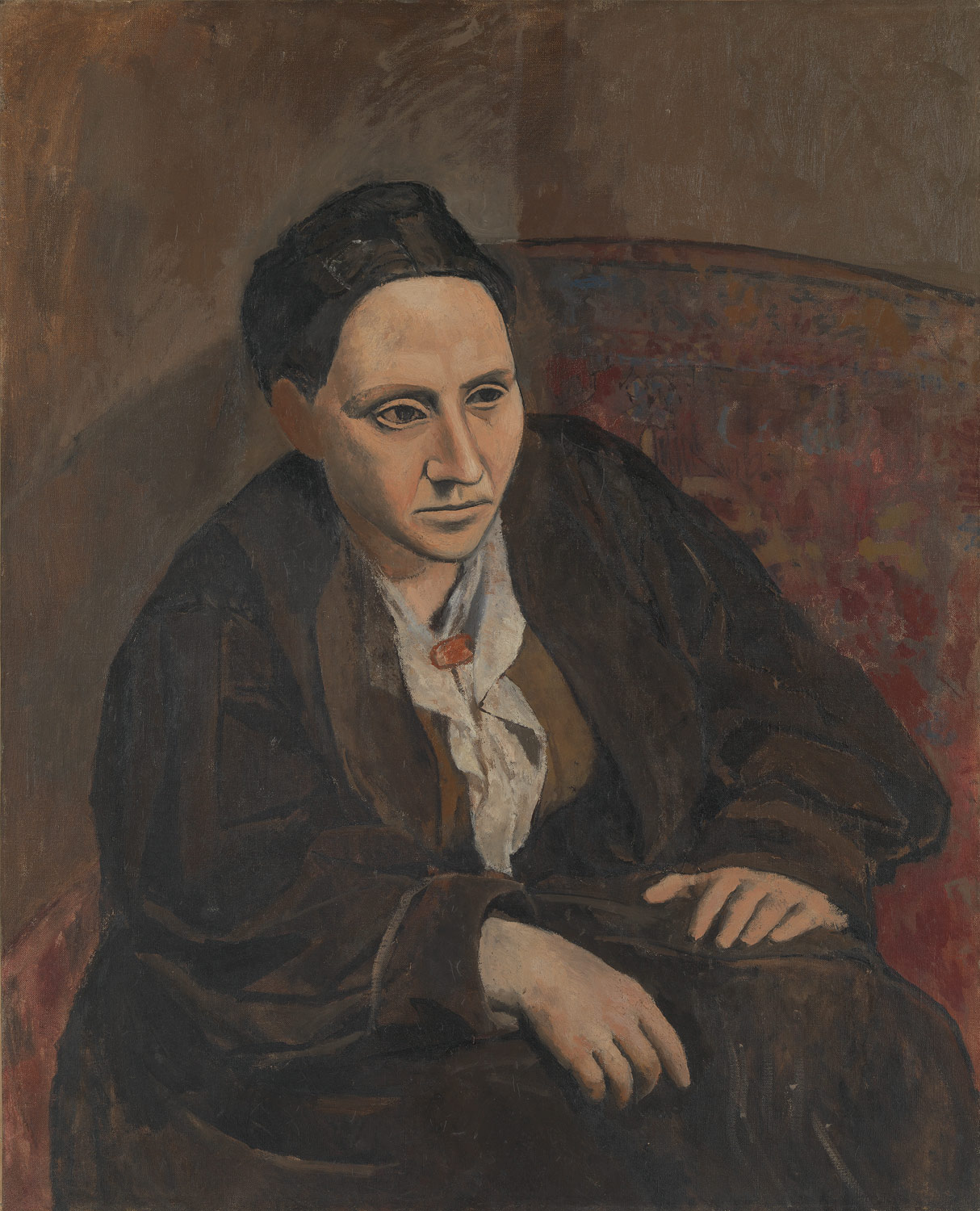
I really like this quote from Gertrude Stein,
It takes a lot of time to be a genius, you have to sit around so much doing nothing, really doing nothing.
My interpretation of this is first, that one needs fallow time for reflection and other time for chatting with friends to generate formative ideas. This incubation phase looks like no work is being done. But that is not right. It is the way things get going. Then second, conscious thought doesn't always do the trick and sometimes the subconscious is very helpful in coming up with solutions. That is one reason for sleep and dreams. But the subconscious may be working even when we are awake. So if you are engaged in something light and not too taxing of your attention, such as watching a junky program on TV, your mind may be at work on problem solving for the idea at hand.
If this is correct, it means that when you are always busy with tasks that someone else can tell you are doing them, then you don't have "time to think." So you can have the appearance of working quite hard, yet end up not being productive in the sense of coming up with a breakthrough idea.
And if you are, like me, an introvert then if you are denied this down time for too long a period you start to go bonkers. As you get older you learn that other introverts crave this time for thinking. Of course, a career in Academia accommodates this sort of behavior. There is the issue of whether it can also be accommodated in the business world, and if so how.
This means that fundamentally we can only really tell about effort for knowledge work in retrospect, by seeing what ideas come from the work. During the production it is near impossible to distinguish from idling that is properly called shirking. And even in retrospect it is hard to tell because many potentially good ideas end in up in the trash. You can't tell ahead of time. You have to try them out.
For your amusement, below is a copy of Picasso's famous painting of Gertrude Stein.
Subscribe to:
Posts (Atom)